With the growing importance of incorporating Aboriginal perspectives into our classrooms I have compiled this list as a useful resource for teachers. I have personally read many of the books listed below and can attest to their greatness. These books all contain important messages that reflect the Seven Sacred Teachings. Some of the selections deal with sensitive subject matters but are handled appropriately in the text. Teachers should exercise caution when selecting materials for their students and be sure to debrief such sensitive subjects. The books marked with an asterisk (*) and can be located at the Winnipeg Public Library. The selections have been divided into the grade levels that correlate with the Manitoba school system. I have enjoyed compiling this list and am committed to continually updating it with new titles that I come across.
The titles below have all been selected from documents called The Association of Book Publishers of BC, The Canadian Aboriginal Books for Schools (2009-2012). The books have been selected and evaluated by teacher-librarians.
The descriptions, cautions and suggested audiences come from the websites below.
Grades K-4

Michael is the smallest player on his lacrosse team, the Thunder. He isn’t respected or getting any playing time at the Ontario Provincial Championships. Off the court, the Thunder and their rival team, the Six Nations War- riors, get into a scuffle over a misunderstanding. Tournament officials misinterpret it as a serious fight with racial undertones and decide to disqualify both teams. All the boys must work together to convey the truth and save their places in the finals. Michael’s sportsmanship and eloquence unexpectedly cast him in a leadership which he also takes to the court during an exciting final game.
Caution: Contains derogatory comments about First Nations people. They are handled appropriately and rejected firmly by the characters.

Cree author writes about a young boy who gets lost in a new city. Follow the adventures of Chuck as he gets lost on his first trip to the big city. Chuck encounters stray dogs and alley cats, kids on skateboards and rollerblades, and tall office towers. After realizing he is lost, Chuck relies on what he has learned to find his way back to his kookum’s (grandmother’s) condo.
SUBJECT AREAS: HEALTH & CAREER EDUCATION, SOCIAL STUDIES

(*) The First Mosquito by Caroll Simpson
This dramatic tale introduces chil- dren to many of the mythological creatures of the Pacific Northwest, both good and evil. When Yex loses his spear in the forest, he decides to go looking for it, and becomes lost. His mother is sure the Bloodsucking Monster has taken him and she devises a way to rid the forest of this beast.
SUBJECT AREAS: ENGLISH, SOCIAL STUDIES

(*)The Flower Beadwork People by Sherry Farell Racette
This book tells the story of how the Métis people came to be in Canada and how they are distinct from both First Nations and European culture.
SUBJECT AREAS: ENGLISH, SOCIAL STUDIES.

Fox and Bear get into an argument. When Bear loses his temper he accidentally pulls off Fox’s front leg. Raven retrieves Fox’s leg by tricking Bear but puts it back on the wrong way. That is why Fox’s legs look crossed.
SUGGESTED AUDIENCE: 2-9 SUBJECT AREAS: ENGLISH, SOCIAL STUDIES

Shawna moves to the west coast with her mother, but misses Manitoba and her grandparents. Meshom (grandfather) and Kokum (grandmother) come to celebrate her tenth birthday. Meshom brings a mysterious gift in a burlap sack. It is a small, white plaster figure representing the “Little One”, who is a trickster in Ojibway culture.
SUBJECT AREAS: ENGLISH, SOCIAL STUDIES

This story within a story, written in both English and Michif, describes the significance of a particular Manitoba maple to the Métis people. The grandfather narrating the story describes his boyhood joy and delight every time his family approached this tree, as it was the “Métis way” to stop for tea and bannock there. His father showed him that within the hollow of the tree was a cache of items left by travellers for anyone in a time of need. The hollow was also a message centre, and a symbol of honesty and respect and of the earth’s bounty.
SUBJECT AREAS: ENGLISH, SOCIAL STUDIES, VISUAL ART
 (*) The Little Hummingbird by Michael Nicoll Yahgulanaas
The message in this simple story is to do the best you can. When the forest catches fire, the little hummingbird flies to the stream again and again to fill its beak with water to douse the flames. The other animals cower in fear and watch in awe as the hummingbird takes action. At story’s end we do not know whether the hummingbird’s efforts are successful. We wonder whether the other animals decide to pitch in.
SUBJECT AREAS: ENGLISH, ESL, SCIENCE, SOCIAL STUDIES, VISUAL ART

Island Kids by Tara Saracuse
From tsunamis to sailboats, light- houses to castles, cougars to sea monsters, island kids encounter life with courage and describe their world with humour and wisdom.
Caution: Some stories address Japanese internment and First Nations residential schools.
GRADES 4-7
SUBJECT AREAS: ENGLISH, HEALTH & CAREER EDUCATION, SOCIAL STUDIES
Middle Years Selections
Grades 5-8
 Fight for Justice by Lori Saigeon
When Justice and his twin sister Charity become the targets of bullying, Justice feels it is up
to him to defend his family’s honour. But the bullies are bigger and more violent than
to him to defend his family’s honour. But the bullies are bigger and more violent than
he is and the situation seems beyond resolve. Afraid that telling will only make things worse, Justice hides the truth. His favourite place is the reserve where his Mushum and Kokum live and there Justice finds some peace as well as some good advice. With help from his family his self-confidence grows and Justice learns to look at the world that the bullies live in and to stand up for himself without resorting to violence.

In this French language picture book, Bouchard explains that we each have a “totem” or animal spirit guide that is the source of our strengths and our weak- nesses. Asked by an elder if the Bear is his totem, he responds yes, a grizzly bear. That night, as instructed by the elder, he calls forth his totem. It is not the grizzly who comes to him, it is the Raven. Bouchard then shares the legend told to him by his grandmother, about how a great chief came to discover his totem, which was also the Raven.
SUBJECT AREAS: FRENCH, SOCIAL STUDIES

Murphy is a fair-haired Aboriginal boy facing a challenging transition from his comfortable Long Inlet Tribal School to middle school as a Grade Seven student. He and his three soccer-loving pals are all expected to make the provincial champion middle school soccer team. However, their superstar player begins playing and behaving poorly and the friends eventually learn that he has leukaemia. With the help of their devoted tribal coach, Uncle Rudy and a new middle school friend, Molly, the “Formidable Four” learn that the power of positive thinking, persistence and supportive relationships will help them through this trying time.

Dream Catcher by Stella Calahasen
Dream Catcher is the story of Marin. She dreams of the time of her forefathers but also has terrible nightmares in which she is attacked by a she-spider. Her mother and Kohkum (grandmother) plan to have her visit with an Elder, Maskwa, who performs a smudge ceremony and tells Marin the legend of the Spider Woman, a strong medicine woman. Marin learns about her culture and how to make a dream catcher. When hung above the bed it “catches” the bad dreams and lets the good dreams through.
SUBJECT AREAS: ENGLISH, SOCIAL STUDIES

(*) Hannah and the Spindle Whorl by Carol Anne Shaw
While exploring near her home on Vancouver Island, 12-year-old Hannah stumbles across a spindle whorl, a traditional weaving tool used by the Coast Salish people. This discovery sparks Hannah’s curiosity about the local First Nations peoples.
SUBJECT AREAS: ENGLISH, SOCIAL STUDIES
 Oil King Courage by Sigmund Brouwer
Friends, Gary and Reuben, live for hockey. When their Inuvik team gets a chance to play the WHL Edmonton Oil Kings, they put on their best game. Reuben’s performance earns him an invita- tion to go to Edmonton to try out for the Oil Kings, a chance of a lifetime. But 17-year-old Reuben needs his Grandma’s consent to be able to make the trip, and she is intent on having Reuben stay in the north to learn the old way of life in order to gain respect for his Inuit heritage. She eventually relents, with the condition that Reuben seek out the truth about his grandfather’s death. A fundraising hockey tournament takes Gary and Reuben from one northern community to another, where they follow the grandfather’s mysteriously criminal demise.
SUBJECT AREAS: ENGLISH, SOCIAL STUDIES

The People and Josh Wilson by John Reid
Josh Wilson is a grade nine student in Holyoke, Massa- chusetts. One Saturday morning, while photographing a local aban- doned mill for a school project, Josh falls through a hole and finds himself in a parallel world where history has taken a different path and Native Americans retain control of much of North America. With the help of Rencatha, a Mohican girl, Josh searches for a way back to his world. Along the way, the two teenagers are captured by renegades, help save Dutch colonists from homes destroyed by a hurricane and aid in averting a takeover of the Mohican capital by invaders.
SUBJECT AREAS: ENGLISH
 Northern Kids by Linda Goyette
Goyette uses her own experience living in and visiting the Northwest Territories, Nunavut and the Yukon to inform her collection of true stories told by northern children from 1870 to the modern day.
Caution: Stories address First Nations residential schools, death of family members and a dying child’s letter to his family.
SUBJECT AREAS: ENGLISH, HEALTH & CAREER EDUCATION, SOCIAL STUDIES
SUBJECT AREAS: ENGLISH, HEALTH & CAREER EDUCATION, SOCIAL STUDIES

(*) Shadow Riders by B. J. Bayle
This dramatic adventure story follows two brothers, one an adopted Aboriginal boy, as they join the trek of the North West Mounted Police in an effort to find the horses stolen from their family farm.
SUBJECT AREAS: ENGLISH, SOCIAL STUDIES
 (*) Fatty Legs (also available in French!) by Christy Jordon-Fenton and Margarent Pokiak-FentonThis autobiography follows a young Inuit girl, Margaret (Olemaun) Pokiak, in her quest to learn to read. To get an education she must leave her family, community and culture on Banks Island to attend a Catholic residential school in Aklavik. Despite the misgivings of her parents Margaret gets her wish and goes to school. There she encounters a nun who takes an immediate and vindictive dislike to her. Margaret doesn’t let this get her down, on the contrary she teaches “the rave” a lesson about human dignity. Margaret emerges from the school with her spirit intact, and with the ability to read. Family photographs add to the authenticity of the story.
Caution: Some younger readers may find the illustrations disturbing. The religious order is portrayed in an unflattering light.
SUBJECT AREAS: SOCIAL STUDIES, ENGLISH, FRENCH

(*) Les Septs enseignements sacres / Niizhwaaswi gagiikwewin by David Bouchard and Joseph Martin
Aboriginal spiritual teachings are shared in this French language picture book and DVD set. Bouchard, the celebrated Métis author, and Martin, an expert on indigenous spirituality, collab- orate to express the teachings found throughout Aboriginal cultures.
SUBJECT AREAS: FRENCH, SCIENCE, SOCIAL JUSTICE, SOCIAL STUDIES
SUBJECT AREAS: SOCIAL STUDIES, ENGLISH, FRENCH

(*) Les Septs enseignements sacres / Niizhwaaswi gagiikwewin by David Bouchard and Joseph Martin
Aboriginal spiritual teachings are shared in this French language picture book and DVD set. Bouchard, the celebrated Métis author, and Martin, an expert on indigenous spirituality, collab- orate to express the teachings found throughout Aboriginal cultures.
SUBJECT AREAS: FRENCH, SCIENCE, SOCIAL JUSTICE, SOCIAL STUDIES
Senior Years Selections
Grades 9-12
 (*) The 500 Years of Resistance Comic Book by Gord Hill
Gord Hill, a member of the Kwakwaka’wakw nation and a self-described warrior, has written an account of indigenous Americans from 1492 to the present day in a graphic format. In four parts: Invasion, Resistance, Assimilation and Renewed Resistance it portrays indigenous peoples’ resistance to European colonization of the Americas.
Caution: Some coarse language is included and a murder is depicted.
SUBJECT AREAS: SOCIAL STUDIES
SUBJECT AREAS: SOCIAL STUDIES
 My Mi'kmaq Mother by Julie Pellissier-Lush
My Mi’kmaq Mother is a memoir of the early childhood of the author, growing up half white, half Mi’kmaq on Prince Edward Island in the 1970s and early 1980s. It is written as a series of vignettes: how her parents met and their life before she was born, their life when she was a baby, and then her life after her mother’s death when the author was still a toddler. It explores how growing up with a single father and a mother who was gone but still a presence in her life affected her. The book explores the world from the point of view of a small child who didn’t always know why her life is the way it is.
Caution: Includes one chapter with a non-graphic scene of sexual abuse of the main character.
SUBJECT AREAS: ENGLISH, SOCIAL STUDIES
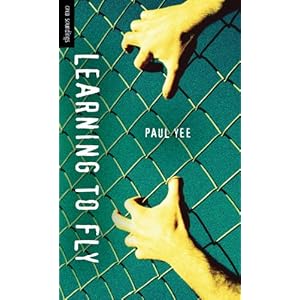
 Learning to Fly by Paul Yee
 America's Gift: What the World Owes to the Americas and their First Inhabitants by Kathe Roth and Denis Vaugeois
Originally published in French, this fascinating book is an exploration of the contributions that have been made by the Americas and the First Nations of the Americas to the world. While its main body is devoted to an alphabetical glossary of these contributions, things that the European newcomers adopted into their lives and then took back to Europe when they returned, it also gives a general outline of the contact and colonization history of North and South America. Many of the entries give extensive explanations of how that particular object, word or idea has played a role in the rest of the world after becoming
widespread.
SUBJECT AREAS: HISTORY, SOCIAL STUDIES

Billy Green Saves the Day by Ben Guyatt
Guyatt’s novel, set during the War of 1812, is based upon the heroic deeds of Billy Green, an 18-year- old, living in Stoney Creek, Upper Canada. Green, who wants to join the British army against his father’s wishes, observes American troops moving towards Burlington Heights. A secondary plot involves Green’s love for Sarah, the daughter of Samuel Foote, an American supporter. Guyatt describes First Nations involvement in the war by including John Norton, Six Nations Chief, as one of his characters.
SUBJECT AREAS: ENGLISH
 (*) I Knew Two Metis Women: The Lives of Dorothy Scofield and Georgina Houle Young
by Gregory Scofield
Scofield’s collection of poetry pays tribute to the two women who had the greatest impact on his life, his mother and his aunt. Scofield recounts the many challenges his family faced during his childhood including poverty, addiction, sexual abuse, violence and prejudice. Despite many adversities, Scofield paints a picture of a loving family.
SUBJECT AREAS: ENGLISH, SOCIAL STUDIES
 Learning to Fly by Paul Yee
Jason is the only Chinese student in his small town high school. He has no friends and he desperately wants to go “home” to China. To ease his pain, Jason smokes marijuana. Through his dope smoking Jason hooks up with a First Nations boy, nicknamed “Chief”, and three poor white kids. When Jason’s new friends get him to buy dope for them, Jason is arrested and charged with trafficking. Jason’s dope-smoking friends each struggle with a kind of discrimina- tion – being Aboriginal or being poor. Chief is there for Jason when he is suicidal and Jason returns the favour in the exciting climax of the story. SUGGESTED AUDIENCE: 9-12 SUBJECT AREAS: ENGLISH
LANGUAGE ARTS, SOCIAL STUDIES
LANGUAGE ARTS, SOCIAL STUDIES

Originally published in French, this fascinating book is an exploration of the contributions that have been made by the Americas and the First Nations of the Americas to the world. While its main body is devoted to an alphabetical glossary of these contributions, things that the European newcomers adopted into their lives and then took back to Europe when they returned, it also gives a general outline of the contact and colonization history of North and South America. Many of the entries give extensive explanations of how that particular object, word or idea has played a role in the rest of the world after becoming
widespread.
SUBJECT AREAS: HISTORY, SOCIAL STUDIES

Billy Green Saves the Day by Ben Guyatt
Guyatt’s novel, set during the War of 1812, is based upon the heroic deeds of Billy Green, an 18-year- old, living in Stoney Creek, Upper Canada. Green, who wants to join the British army against his father’s wishes, observes American troops moving towards Burlington Heights. A secondary plot involves Green’s love for Sarah, the daughter of Samuel Foote, an American supporter. Guyatt describes First Nations involvement in the war by including John Norton, Six Nations Chief, as one of his characters.
SUBJECT AREAS: ENGLISH

by Gregory Scofield
Scofield’s collection of poetry pays tribute to the two women who had the greatest impact on his life, his mother and his aunt. Scofield recounts the many challenges his family faced during his childhood including poverty, addiction, sexual abuse, violence and prejudice. Despite many adversities, Scofield paints a picture of a loving family.
Caution: Some violence, sexuality and coarse language.
SUBJECT AREAS: ENGLISH
 (*) The Life of Helen Betty Osborne: A Graphic Novel
by David Alexander Robertson
This is the heart-wrenching true story of Helen Betty Osborne as told through the eyes of a boy writing a school report. The graphic novel tells how Betty was a victim of racism, rape and discrimination not only on the night of her death but throughout her life. Canada’s historical attitudes towards Aboriginal peoples and society’s indifference are also part of the tale. The events of the night of her death in 1971 are recapped including details of her residential school experience and the closeness she shared with her friends.
 (*) The Middle of Everywhere by Monique Polak

(*) Noah's Last Canoe: The Lost Art of Cree Birch Bark Canoe Building by Doug Evans
This book, a step-by-step documentation of the building of a traditional birch bark canoe, is a rare record preserving one of the vanishing skills and ingenious engineering feats of the First Nations people. Few can build a canoe in a traditional manner and “even fewer can recall the myths, songs and other cultural associations”. Noah’s birch bark canoe was used by the Cree who resided in the regions of northern Saskatchewan and Manitoba. It is lightweight, resilient, strong and hydrodynamic. The canoe was used by explorers, missionaries, scientists, government agents, tourists and sportsmen, and was the ideal vehicle for the vast systems of waterways that link the seasonal camping and hunting grounds. SUBJECT AREAS: SOCIAL STUDIES
SUBJECT AREAS: ENGLISH
 (*) The Life of Helen Betty Osborne: A Graphic Novel
by David Alexander Robertson
This is the heart-wrenching true story of Helen Betty Osborne as told through the eyes of a boy writing a school report. The graphic novel tells how Betty was a victim of racism, rape and discrimination not only on the night of her death but throughout her life. Canada’s historical attitudes towards Aboriginal peoples and society’s indifference are also part of the tale. The events of the night of her death in 1971 are recapped including details of her residential school experience and the closeness she shared with her friends.
Caution: Includes the use of “squaw” and “Indian” to highlight prejudice.
SUBJECT AREAS: ENGLISH (*) The Middle of Everywhere by Monique Polak
In this novel, fifteen-year-old Noah leaves his home in Montreal to spend a school term with his father, a teacher in a remote northern Quebec Inuit village. At first, he cannot understand why anyone would want to live in such bleak place “in the middle of nowhere”. As he gradually gets to know the people and their ways, Noah develops an appreciation of the Inuit way of life. The less- than-perfect Noah sometimes makes poor choices that lead to dangerous situations. He nearly gets his father’s husky killed, has encounters with a bully and a polar bear, loses a five-year-old boy in a snowstorm, and retrieves a severed thumb from the snow. He also falls in love. Readers will become aware of Inuit history and culture while being entertained by this fast-paced, well written story.
Caution: Contains some course language and references to the RCMP’s mass killing of sled dogs between 1950 and 1970.
SUBJECT AREAS: ENGLISH, SOCIAL JUSTICE

(*) Noah's Last Canoe: The Lost Art of Cree Birch Bark Canoe Building by Doug Evans

Withershins is a ritual where someone runs around a church three times. In this novel, Michelle is challenged by her friend, Jason, to do just that, and is transported to 1846 Manitoba. A medicine man tells her she was expected as “she would then return home to teach the lost ones”. The natives teach her how to make moccasins and snowshoes, how to trap and skin rabbits and how to show respect to nature by performing certain rituals. At Fort Garry she assists the regimental doctor and the kitchen staff of the main house. She also experiences romance. Eventually she does get back to her own time, but only after she experiences a few months of what life is like a century and a half ago. She then follows her own family tree to native and Métis roots.
Caution: Explicit descriptions of a trapped animal’s death and its skinning. Includes a childbirth scene where the baby is stillborn. SUBJECT AREAS: ENGLISH, SOCIAL STUDIES




0E9s37E2uLBQ5D-Ji6c!~~60_35.JPG)


